Success and limitations in the trial of dual education and training forms in Europe
Claudia Schreier
In the 2012 memorandum relating to vocational education and training (VET) cooperation, seven European countries resolved to cooperate more closely with one another in response to youth unemployment and the shortage of skilled workers in Europe. Cooperation agreements have now been initiated in all partner countries. These reveal similarities and differences both in the content-related design of the cooperation agreement as well as in the nature and speed of implementation. The article draws some initial interim conclusions based on experiences of the German Office for International Cooperation in VET (GOVET) at BIBB.
Dual education and training attracts international attention
The dual education and training system in Germany, which is based on dual and cooperative principles, is credited as an important factor behind Germany's economic stability and comparatively low youth unemployment. In light of the economic and financial crisis, there has been a growing interest over recent years at an international level in forms of dual education and training.
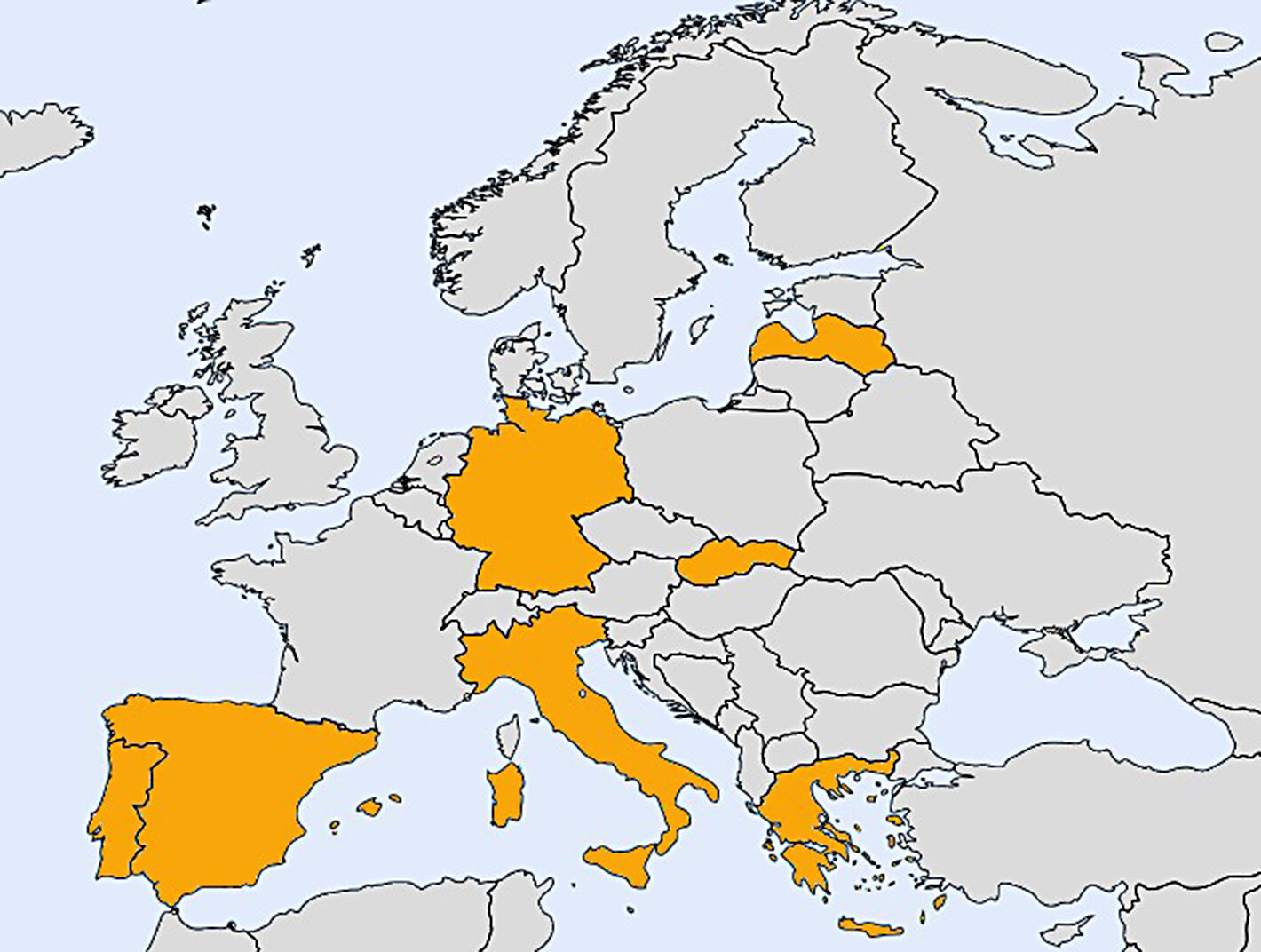
Representatives of the ministries for education, training and employment from seven European countries assembled in Berlin in December 2012, hosted by the Bundesministerium für Bildung und Forschung (BMBF) [Federal Ministry of Education and Research]. This included Germany, Greece, Italy, Latvia, Portugal, Slovakia and Spain. The meeting resulted in the agreement of a memorandum on cooperation in the area of vocational education training which established the following joint goals:
- Reduce youth unemployment and improve the transition into the job market, in particular through the implementation of dual or work-based education and training,
- Increase the attractiveness and quality of vocational education and training,
- Modernise systems of education and training with a focus on dual or work-based education and training,
- Inclusion of social partners within the system of vocational education and training (cf. Memorandum on Cooperation in Vocational Education and Training in Europe 2012).
The BMBF cooperated in bilateral working groups at both a political and operational level in order to implement these goals.
GOVET: Ensuring a coherent presence
Since VET collaboration operates at the interface of a range of responsibilities and policy areas – e.g. education and training policy, development policy, foreign policy and economic policy – it was important for those involved in Germany to coordinate with one another so as to ensure a coherent and transparent presence in order to be able to organise collaboration with partner countries effectively. The German Office for International Cooperation in VET, GOVET, was thus established for this purpose in the BIBB in September 2013 on the initiative of the BMBF. GOVET's core tasks include knowledge management, administrative functions for coordinating activities in the various policy areas and the development and specialist management of BMBF bilateral VET cooperation agreements (cf. THOMANN/WIECHERT 2013). The latter focuses primarily on advice with the implementation of dual forms of education and training and implementation and realisation of projects. To this end, and in addition to the 2012 memorandum, bilateral cooperation agreements were concluded with the six partner countries.
Comprehensive and supportive monitoring remains part of the GOVET area of responsibility (cf. box). Two internal monitoring reports are now available and these form the basis of this article. Alongside the internal monitoring, individual projects are externally evaluated and/or feasibility studies are assigned to external service providers.
Internal monitoring
GOVET monitoring is a continuous process. This records and documents, on an ongoing basis, all activities and outcomes taking place as part of the bilateral BMBF cooperation agreements with the signatory countries to the 2012 memorandum. The monitoring relates exclusively to projects and individual measures in place since GOVET's formation in September 2013. Projects are integrated within a systematic context which is geared towards the realisation of the overarching goals in the memorandum. The monitoring concept comprises the following elements:
- Evaluation of the initial situation before the action
- Creation and updating of a matrix in accordance with the logical framework approach
- Evaluation of individual measures
- Evaluation of projects
- Quantitative assessments
- Creation and maintenance of a database
- Reporting
Implementation: Thematic priorities and initial successes
Requirements are normally determined at the start of the cooperation agreement in the bilateral working groups which are supported locally by a “fact-finding mission”. This involves conducting interviews with relevant stakeholders such as employee representatives, chambers, vocational schools and businesses. Cooperation agreement objectives are then set, and key issues and sectors are determined in the bilateral working groups. On the basis of this, different priorities are agreed in the cooperation agreement according to what is required.
REFORM OF LEGAL REQUIREMENTS
Several partner countries have taken steps to reform or amend vocational education and training legislation and other legal requirements in order to permit dual forms of vocational education and training and/or work-based learning. Italy and Slovakia are notable examples of this.
In Italy, the latest reform of the education and training legislation entered into force on 16.07.2015. This provides for a minimum of 400 hours of practice-based learning over the last 18 months for young people on vocational education and training courses. It provides senior pupils at secondary school with the opportunity to have company-based education and training as part of the final two years of their time at school. Once a training contract is concluded, they are able to complete company-based education and training and at the same time acquire the higher education entrance qualification (cf. MIUR 2014).
A new dual system of education and training was introduced in Slovakia in September 2015. In total, education and training lasts for four years, includes a 50 per cent practical element and leads to a dual school leaving certificate comprising entrance qualification for university and vocational qualification. Businesses select their trainees and conclude a training contract with them which governs the duration and content of the education and training (cf. National Council of Slovakia 2015). The aim of introducing dual education and training is to achieve a greater focus within vocational education and training on demand and practice and at the same time to improve its image. This new form of vocational education and training is being introduced in addition to the largely school-based system of education and training already in place. Companies are therefore taking on greater responsibility in the qualification of their new staff. 160 businesses have already made 1500 training positions available. And in addition to this, 25 vocational schools provided assurances that they will participate with the result that dual education and training has been underway in 30 occupations since the autumn.
MODERNISATION OF EDUCATION AND TRAINING SYSTEMS
A wide range of activities are developing in partner countries under this memorandum goal in particular, and these focus on a specific cluster of themes. Worthy of note here are the development and adaptation of education and training standards and the qualification of VET personnel. The latter involves both the qualification of company-based education and training personnel as well as the advanced training of vocational school teachers. A range of measures and projects have been initiated in relation to both topic areas. Measures often take the form of study visits and local workshops. While study visits at the start of the cooperation are mainly used for information about the dual system and its elements, workshops are used locally for implementing what has been learned. Two examples from Portugal and Slovakia serve to illustrate the way in which the BMBF's bilateral VET cooperation agreements provide specialist support.
In Portugal, GOVET has developed five qualification modules for training company-based education and training personnel in collaboration with the Lisbon Chamber of Foreign Trade and Portuguese partners including the Ministry for Education and Training (MEC), the Employment Agency (IEFP) and the Central Qualification Authority ANQEP. Once the concept was developed, the first key individuals were trained in order to implement the training on a broad basis (cf. ULMER/MÜLLER/PIRES 2015).
“Dual education and training for SMEs in Nove Mesto nad Vahom” was initiated in Slovakia and young people in Slovakia have been trained since September 2015. Small and medium-sized enterprises from the region around Nove Mesto, a vocational school, and the Bratislava Foreign Chamber of Commerce are involved in the project. The project's aim is to take a cohort through the entire process of dual education and training from September 2015 and in doing so to take into account all elements (two learning locations, qualified education and training personnel, education and training standards, chamber examinations, etc.). On the German side, the Foreign Chamber of Commerce and GOVET are supporting the project and undertake, respectively, tasks specified in the work packages. GOVET is using study visits, implementation workshops and cross-occupational continuing education and training to support the adaptation of the curricula for use in a company-based context, as well as the continuing education and training of stakeholders involved. The project is delivering the impetus for ongoing system reform in Slovakia.
Besides the bilateral cooperation agreements, multilateral study visits have also proved successful. Representatives from the European partner countries met again for the second time in Berlin in December 2014. As part of a study programme primarily focussed on education and training in small and medium-sized enterprises as well as in public service, guests were able to broaden their knowledge of company-based education and training practice in Germany. Besides gaining insights from practice, partners were able to discuss their experience with reform directly and share good practice.
Learning experiences: Stumbling blocks
Progress of the VET cooperation agreements varies widely. While close cooperation exists with most countries and is reflected in a high level of momentum as well as varied activities and projects, others are seemingly more hesitant or have even come to a standstill. For example, short-lived and successive changes of government or a change in the contact partner in the partner organisation may inhibit or delay the cooperation. However, stumbling blocks are encountered even in those countries where collaboration started well. The following sets out these stumbling blocks together with recommendations about how they might be overcome.
STUMBLING BLOCK: SECURING INVOLVEMENT OF BUSINESS AND VOCATIONAL SCHOOLS
Securing the involvement of vocational schools and businesses has proved to be a key challenge. Teachers in all participating countries fear, more than anything else, a loss of importance and reduction in teaching positions if education and training transfers from school to business. Another factor in this was that, in some countries, vocational school financing is determined by the attendance of young people in the school. Businesses are also often hesitant in terms of involvement in education and training. On the one hand, they are supportive of practice-based training, while on the other, they shy away from financial involvement and are worried that their investment will not pay off because the young people may move to the competition after completing the training. As a consequence, securing the involvement of suitable practice businesses proved difficult in all countries involved. However, the new education and training models will stand or fall depending on the company involvement. Political policy decision-making is needed here more than anything. The willingness of companies and vocational schools to be involved increases, for example, by creating tax incentives for companies; and abolishing the funding per head for vocational schools may make them more motivated to collaborate. Slovakia has already had positive experiences with this approach.
STUMBLING BLOCK: MANAGING SOCIAL PARTNERSHIP
The inclusion of social partners in the system of vocational education and training was specified as a priority in the memorandum. Management of social partnership generally represents a challenge in all countries although inclusion on the part of companies is easier to implement than on the part of unions. In many countries, union structures are barely developed and are often met with a negative response from business. In other countries, it is the unions themselves who critically oppose forms of company-based learning. They are worried that the economy will exert too great an influence on the curricula and that general education will be neglected. Other unions, on the other hand, fear the exploitation of young people as cheap labour because quality standards and quality assurance mechanisms are often lacking in the practical phases. Then again, business associations are afraid of the cost of the training. In some cases the government department responsible for education and training also tends to be cautious about the involvement of social partners as in many countries collaboration with social partners is unusual.
The response must lie in flexible solutions which can be guided by the specifics of the country concerned. This means that the relevant stakeholders in the country concerned must be involved. A further lesson learned from collaboration to date is that whatever the fears and anxieties the different stakeholders may have in relation to the introduction of company-based learning, these must be taken seriously and appropriate solutions need to be arrived at together. Cooperation agreements will only bear fruit once all those involved stand to benefit from them. This does not just apply at the policy making level, but also at the level of implementation.
STUMBLING BLOCK: IMAGE
Vocational education and training often has a poor image in most countries and this continues to present a challenge. Governments have taken measures in all countries to increase attractiveness. These range from comprehensive image campaigns through to specific measures to improve permeability. This is a long-term task however, as presumably changes will not be evident in how vocational education and training is regarded until those who have completed training successfully enter the employment system and businesses appoint job entrants who are adequately trained and who possess the competencies required on the job market. There is thus no evidence yet of short-term effects, and we may well be wrong to anticipate these.
Further strengthening of peer learning in the cooperation agreement
Systemic changes require significant effort, particularly where these concern structures which have extended beyond national and cultural boundaries. Here it is not just about taking all relevant stakeholders with you, but also the key players at the implementation level. A good analysis of the local situation is important in order to identify requirements and potential solutions.
Resistance to systemic change must, of course, be expected, and because in many countries vocational education and training suffers from a poor reputation, changes relating to this tend to provoke particular resistance. We should not, therefore, expect miracles in the relatively short time which has passed since the memorandum was signed. However, three years have passed since the memorandum was signed on the initiative of the BMBF and it is two years after the official launch of GOVET. Given this, we might venture to assess the degree of success with which the agreed goals have been implemented and progress has been made with the aid of GOVET activities.
As has become clear, there is some variation in the speed with which the BMBF VET cooperation agreements are advancing. Overall, a lively and trusting collaboration has developed in most countries as part of which a range of measures and activities is being implemented. This has involved the establishment of a policy dialogue around vocational education from which Germany might also benefit. Thus, for example, in view of the rising numbers of academics, maintaining the system of vocational education and training as an attractive career path will be a challenge. In addition to the bilateral cooperation agreements, peer learning activities will be strengthened in future in order to encourage mutual learning. From 2016, a peer learning platform is due to be installed and is planned to run for several years. A launch event for this is still scheduled for March 2016. In future, internal monitoring will also be supplemented by surveys of local stakeholders.
Literature
MEMORANDUM ON COOPERATION IN VOCATIONAL EDUCATION AND TRAINING IN EUROPE: Vocational Education and Training in Europe – Perspectives for the Young Generation. Berlin, 10-11 December 2012 – URL: www.bibb.de/dokumente/pdf/memorandumvocational_education_and_training_2012.pdf (retrieved 07.10.2015)
MIUR: Ausbildung im Betrieb – Italien [Education and training in operation – Italy]: Ordinance of 05.06.2014
NATIONALRAT DER SLOWAKISCHEN REPUBLIK [NATIONAL COUNCIL OF THE SLOVAK REPUBLIC]: Gesetz vom 01.03.2015 über die Berufsbildung und die Änderung und Ergänzung einiger Gesetze [Legislation dated 01.03.2015 regarding vocational education and training and the modification and amendment of certain legislation]
THOMANN, B.; WIECHERT, M.: Berufsbildungszusammenarbeit aus einer Hand – Die Zentralstelle für internationale Berufsbildungskooperation im BIBB [Vocational Education and Training from a Single Source – The German Office for International Cooperation in VET at BIBB]. In: BWP 42 (2013) 5, p. 35-37 – URL: www.bibb.de/veroeffentlichungen/de/bwp/show/id/7140 (retrieved 10.09.2015)
ULMER, P.; MÜLLER, H.-J.; PIRES, F.: Berufspädagogische Weiterbildung betrieblicher Tutorinnen und Tutoren – Ein deutsch-portugiesisches Pilotprojekt [Continued education and training using vocational pedagogy of company-based tutors – A German Portuguese pilot project]. In: BWP 44 (2015) 4, p. 34-37 – URL: www.bibb.de/veroeffentlichungen/de/publication/show/id/7686 (retrieved 10.09.2015)
CLAUDIA SCHREIER
Dr., Research associate, International Cooperation and Advisory Services/German Office for International Cooperation in VET (GOVET) at BIBB
Translation from the German original (published in BWP 6/2015): Martin Lee, Global SprachTeam, Berlin