Opportunities and prospects of vocational training
Interview with four trainees on their expectations, experiences and career plans
Interviews: Prof. Dr. Gerhard Christe, Dr. Christiane Eberhardt, Katharina Rempel
What are the attractions of vocational training from the trainees' viewpoints? Why did they choose their vocational training programmes? What are their plans once they have gained their certificates? The four people interviewed talk about their motivations, expectations and plans. A highly diverse set of motives and prospects are revealed. All interviewees agree, however, that their chosen training gives them an opportunity to realise the career goals on which their sights are set.
Sven Frenzel: ''I had no idea that working as a painter and varnisher would be so varied''

Sven Frenzel, born in 1991, gained a general secondary school certificate before embarking on an extra-company training programme; he is currently in his second year of training as a painter and varnisher with the painting and decorating firm Malereibetrieb Hubert Jürgens in Hamburg.
BWP: Was your current training occupation your first choice, or did you originally have other plans?
Frenzel: I wanted to do my training in a skilled craft, at any rate. Initially I was placed on an extra-company training programme at KOM, which is an independent provider. It's a good place to get some practice. They place young people in firms offering work experience placements. And those who do well can be taken on permanently. I did my work placement here at the firm Malereibetrieb Jürgens, and because the firm was pleased with me they took me on permanently. I just happened to be sent to the right firm, I suppose. I'd applied to skilled craft companies all over the place but I liked this one best. And I am still enjoying it.
BWP: What attracted you about a skilled craft occupation or training as a painter and varnisher? What were your expectations?
Frenzel: I can't quite remember any more. I just wanted to get a good training and find an occupation that I enjoyed. I'd been at school a long time by then. Before my training I did a work experience placement. I liked it very much. I had no idea that working as a painter was so varied. Everybody thinks "it must be so dull, painting all day long". But I saw that the occupation offers a lot more than that.
BWP: What do you mean by varied?
Frenzel: What I mean by varied, for instance, is that I might also get to work outside on the façade or on the thermal insulation. Although I haven't done it myself yet, I'm certainly looking forward to it. There are also various techniques that you can use, like varnishing for example. Another thing I like is all the work that goes on before anyone ever starts painting: surface preparation and so on. I find it really enjoyable. Sometimes it involves a lot of sanding, but it's just part of the job.
BWP: So are you satisfied with your choice today?
Frenzel: Yes, very! In fact it has even exceeded my expectations. Especially here in the firm. Everyone is kind and looks out for you. The workplace has a good atmosphere. People make time to help me.
BWP: What do you like most about your training?
Frenzel: Lots of things! There's always something different to do. And if I don't know what to do, they explain it all to me. If I have questions I can always turn to my trainer. I'm really learning a trade here. And I can even make use of it in my own time. My brother is moving next week, for example. So last week I went and did a bit of painting at his place.
BWP: And are there any aspects that you aren't so keen on or that leave room for improvement?
Frenzel: No, there isn't really. Maybe something will come up, but nothing springs to mind at the moment. That might also be thanks to the firm. A few people in my class never have anything good to talk about. Their work is always the same; they have to do overtime and don't get paid for it, or aren't allowed to leave early sometimes to make up for it. But I'm very satisfied here.
BWP: When do you expect to finish your training and have you already made plans for afterwards?
Frenzel: On 1 September 2014 I will finish my training. I hope I will then be taken on permanently. I'd like to stay here at the firm and work at journeyman level. I wouldn't like to do further training for the time being.
Ruth Vasko: ''I noticed that without a solid training I was running up against career limitations.''
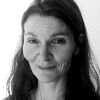
Ruth Vasko, born 1969, gained an intermediate school leaving certificate and worked for 20 years in the care sector; she is currently in her first year of training as a carer for the elderly at the Caritas Association for the city of Bonn.
BWP: Was your current training occupation your first choice, or did you weigh up other options?
Vasko: I always wanted to work in a social occupation and was actually employed in that field for a very long time. After the birth of my first child I worked as a nursing auxiliary and later as a healthcare assistant. Even then, I planned to take a fully fledged nursing qualification but because of my family situation I never managed to do so. Instead I took continuing education courses to become a hospice assistant, a personal care attendant and, when I started in a residential community for people with dementia - where I'm still working now - as a gerontopsychiatric worker.
BWP: Why did you finally decide to take vocational training, in the end? What is the attraction of working as a carer for the elderly, and what were your expectations?
Vasko: At some point I realised that I can connect with people, I suppose, and that I enjoy this kind of work. That's what motivated me to continue working in this field. But in the final analysis, employers all insist on exam certificates. I knew that however much experience I could bring to the work, the lack of an exam certificate would always rule me out, even during the application procedure. Added to that, colleagues don't give you the same respect otherwise. You have the knowledge but you are always in the shadow of the experts and seen as the person who ultimately doesn't have a clue. That was the problem that drove me crazy in the end, and I wanted to do something about it. Over the course of almost 20 years, by that time, I'd learnt a lot but I repeatedly ran up against limitations because I lacked the foundation of a solid training. So I made up my mind to take my exam.
BWP: Are you satisfied with your choice today? Have your expectations of the training been fulfilled so far?
Vasko: On the practical side, yes. Although I haven't come across much that is new to me at school over the last six months, that doesn't really matter. I think in the care sector in particular, continuous professional development is very important because so much is changing. For example, 15 years ago dementia was not even part of the curriculum for the vocational training to become a carer for elderly people. That's changed now.
BWP: What do you like about your training?
Vasko: I very much like being on practical duty, and I still really enjoy broadening my knowledge and learning from my colleagues' experience.
BWP: And are there any aspects that you aren't so keen on?
Vasko: At school I occasionally run up against my limitations. I suppose it's mainly because there's such an age difference between myself and my classmates. It's very tiring to sit in a class where the majority of learners are very young. Maybe I bring different expectations and a different type of motivation to the matter: I want to listen and learn. But because of the teaching conditions, unfortunately the content is suffering quite badly at the moment.
BWP: What could be improved?
Vasko: There are three other trainees of my age in my class. They're having the same problems. I would be glad if the learning atmosphere improved over the course of the training.
BWP: What kinds of things can you do with your training?
Vasko: I can work as a care worker in old people's homes and outpatient services. At any rate, I'd like to advance professionally after finishing my training. I can take advanced training to become a residential or care services manager, or else I can work in the gerontopsychiatric department of a hospital.
BWP: When will you finish your training and have you already made plans for afterwards?
Vasko: I should finish my training in December 2015. Since I'll have completed the advanced training to become a gerontopsychiatric worker by then, I'm already fairly sure that I'd like to work in a residential care community at some point. Probably for people with dementia; in psychiatric care, at any rate. Later on I'd like to set up one of these residential settings myself, because I think they're very worthwhile. But for the time being I would like to stay on my ward.
Aryan Aziz: ''I wanted to seize the opportunity and power ahead with my training.''

Aryan Aziz, born 1993, gained an intermediate school leaving certificate and completed an introductory training qualification; he is currently in his second year of training as a management assistant for retail services at Deutsche Telekom in Bonn.
BWP: Was your current training occupation your first choice, or did you originally have other plans?
Aziz: I didn't know exactly what I wanted to do. I wanted to work with people, at any rate. After leaving school I did a year's voluntary work in the community. My parents had just separated and it wasn't an easy time for me to decide which way to go career-wise. I did voluntary work with a children's group at the youth centre and realised that working with people appeals to me. I could picture myself doing something in the educational field. But even then I also had an interest in working as a management assistant, because I'm good at selling, too. I remember that from the days when we used to collect and sell stickers. I was very successful at it.
BWP: And why did you finally choose to train as a retail management assistant?
Aziz: The employment agency had pointed it out to me. I had registered with them, and they asked me what I thought of Deutsche Telekom. There was an option to take an introductory training qualification with them. In my mind, the penny dropped immediately: Deutsche Telekom? A huge and responsible employer. And all kinds of future prospects are on offer, for instance if I want my own home, family and children at some stage. So I had a choice between training as a nursery teacher or at Telekom. I thought I'd prefer to go for Telekom, even if the only way in was a one-year work placement - an introductory training qualification, in other words. But that didn't matter to me, because I wanted to power ahead and get a proper training.
BWP: What were your expectations at the time, when you applied for the introductory training?
Aziz: Actually I thought I'd be thrown in at the deep end here, and have to go straight into sales. But the focus in the first few weeks was purely on getting to know one another. After that there was a "taster phase" in the shop. I'd also been talking to my brother who works in retail, to find out what it's like advising customers, standing at the till and being on your feet for hours. It didn't put me off, though.
BWP: Are you satisfied with your choice today?
Aziz: I'm completely satisfied! My expectations have not just been fulfilled; they've been exceeded. And I did well enough to be awarded learning credit for the whole of that first year, so I've skipped straight into the second year of training. I didn't feel like an introductory trainee but a completely 'normal' apprentice. Telekom has already become rather like a family to me. I already call myself a Telekom person and try to project that image outside the firm.
BWP: What do you like about your training?
Aziz: When I make comparisons with other apprentices, we have it very good here. I earn good money; on the days I attend vocational school I don't have to go into work afterwards; I have regular working hours and get very good discounts. We are given time to prepare for examinations and can revise alongside the trainer and our fellow trainees. Now if I look at some of the others I meet at vocational school, they've had to slog at work and then do extra revision at home. The other thing is I have plenty of contact with people here, so I learn a lot about them and how to interpret their facial expressions and body language. That way, I instantly know whether or not somebody wants help and how I can respond. I also enjoy attending the part-time vocational school because it's a place to exchange views with trainees who work in other companies and maybe have different selling techniques from ours.
BWP: And is there any aspect that you aren't so keen on?
Aziz: Hmm - quite honestly I can't think of an answer to that. I don't think there's anything I dislike. I've settled in here very well indeed.
BWP: When do you expect to finish your training and have you already made plans for afterwards?
Aziz: I should finish my training in August 2014. I'd like to do a subject-specific higher education entrance qualification after my training, but maybe not right away. To start with I'd like to stay here in the company and keep working in the shop. If I then had an opportunity to take a dual study course here, I would definitely do so.
Melanie Thöni: ''It makes my studies much more meaningful if I can immediately apply what I've learned.''

Melanie Thöni, born in 1991, gained a higher education entrance qualification; she is currently in her second year of training on a dual study course for a Bachelor of Engineering, majoring in mechanical engineering, at the Fraunhofer Institute for High-Speed Dynamics, Ernst-Mach-Institut (EMI) in Freiburg and the Baden-Württemberg Cooperative State University in Lörrach.
BWP: Was your current training occupation your first choice, or did you have other plans as well?
Thöni: It was my first choice. Even at school I was interested in applied mathematics and I took maths and physics as advanced-level subjects. At home I often used to do puzzles and play the sort of games that required mental effort. Later I completed a work placement in the chemical industry at Rhodia Acetow in Freiburg, where I spent time in various departments looking at how mechanical engineers work. I immediately realised that I enjoyed it and could probably do well at it.
BWP: And what attracted you to the dual study course for the Bachelor of Engineering degree?
Thöni: My main motivation was the alternation between work and study, and I was keen to apply what I learned in practice in order to understand it better. My uncle told me about his dual study course at a university of cooperative education, and that it worked well for him but was not so highly regarded in those days. But that has changed. It's no longer seen as one of those Bachelor's programmes where everyone thinks you'll graduate yet still not be competent.
BWP: What were your expectations to start with?
Thöni: I knew that I'd alternate between going to university for three months, followed by exams, and then doing three months training at the Fraunhofer Institute. The fact that these phases actually have nothing to do with each other was clear to me beforehand. But naturally I expected the cooperation to work despite that.
BWP: And does it work? Have your expectations of the training been fulfilled so far?
Thöni: At the Institute I have a supervisor and at the university there is a course leader. The two of them talk to each other - as far as I know - primarily because of the practical reports that I write during the practical phases. It's generally true that whatever one learns during the three theory months is subsequently applied in practice. But in our case, sometimes it wasn't strictly three months and I only spent two weeks or so at the Fraunhofer Institute. It's difficult to make worthwhile use of such a short practical period. But generally I'm very satisfied with the Mechanical Engineering degree programme. The variety offered by the dual study course is ideal for me. Whenever we've learnt something at the university and been examined on it, we go back to the Institute and directly see how it is applied. My supervisor often organises opportunities for me to take part in various projects. For me, that makes the learning so much more meaningful. So my expectations have been fulfilled.
BWP: And are there any aspects that you aren't so keen on?
Thöni: I find it problematic being the only woman on a Mechanical Engineering course. Many lecturers take no notice of what I say, simply because I'm a woman. And classmates and staff constantly crack jokes, e.g. when I'm working on a machine. Once in a while it can be quite amusing, but overall it's very tiresome and somewhat disrespectful.
BWP: How could it be improved?
Thöni: There should be more transparency about it so that I don't have to go and raise it with the course leader at the university and then do the same again at the Institute. I think there should be more public debate about the prejudices that exist against women in these professions.
BWP: What kinds of things can you do later on with your Bachelor's degree?
Thöni: Because the demand for mechanical engineers is generally very high, especially in Germany, the Bachelor's degree already lays a good foundation for direct entry to employment. There are many sectors, such as vehicle construction, aerospace, chemicals or energy technology, in which I could specialise.
BWP: When will you finish your dual degree and have you already made plans for afterwards?
Thöni: I should finish my dual degree in September 2014. First I would like to work for a while and go abroad to improve my English so that I can communicate easily with international customers. Then I would like to do a Master's degree to deepen my knowledge in the field of numerical simulation.
Translation from the German original (published in BWP 4/2013): Deborah Shannon, Academic Text & Translation, Berlin